DEMKO
G R O U P Ltd. Co
REVERSE ENGINEERING AND TECHNOLOGY TRANSFER
Reverse Engineering; Information Collection, Information Evaluation, Design Optimization and Technology Transfer of Equipment and Machines
• Analysis of dimensional, geometric and tolerance information
• Analysis of the performance of internal parts and mechanisms of equipment
• Evaluation of the manufacturing process and material analysis of important parts
• Evaluation of the mechanical and appearance condition of parts
• Compiling a comprehensive technical report on reverse engineering of equipment

• Manufacturing engineering and preparation of final manufacturable drawings
• Review and optimize the design
• Review the method of manufacturing parts according to the constraints

• Comprehensive reverse engineering analysis of equipment
• Knowledge acquisition and technological leap
• Development of design and engineering knowledge

Information Gathering
Information Evaluation
Design Optimization
Technology Transfer
• Specialized disassembly of equipment and machinery without drawings
• Preparation of 2D drawings and accurate 3D models
• Extraction and compilation of assembly instructions

Reverse Engineering and Technology Transfer
Technology transfer is a strategic move towards sustainable development that requires the selection of an appropriate model. One of the most important methods of acquiring technology among developing countries is reverse engineering.
Reverse engineering is proposed as an implementation model for informed access to technology from technology. This model is a suitable step in extracting product design knowledge. In this model, economic value can be assessed and can be used to identify, develop, manufacture and optimize the product.
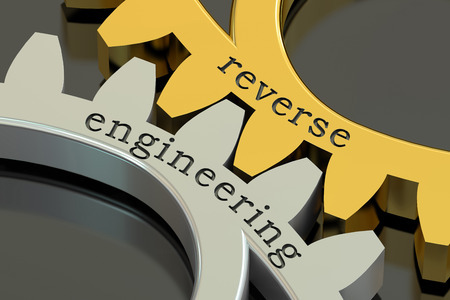
Reverse engineering is not used as an unregulated copying, but as a process for documentation, technical knowledge compilation, localization, technology transfer and even innovation.
All reverse engineering processes consist of three basic stages: information extraction, modeling and review.
Information extraction; is the act of collecting all relevant information to perform operations.
Modeling; The act of combining collected information into an abstract model that can be used as a guide for designing a new thing or system.
Verification; Testing the model to ensure the validity of the chosen abstract model.
DEMKO Group's experienced reverse engineering team, with a knowledge-based approach and in collaboration with design, research and development teams for the transfer of advanced industrial technologies, is ready to provide a wide range of services:
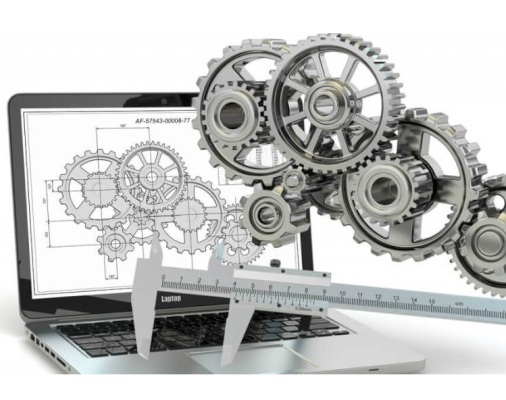
Dimensioning and scanning of spare parts with the most advanced tools and technologies, specialized disassembly of equipment and machinery without drawings based on manuals and equipment instructions, preparation of two-dimensional drawings and three-dimensional models, preparation of reports on the data collection process and documentation of all stages, as well as extraction and compilation of assembly instructions for equipment and machinery parts without manuals
• Information evaluation;
Evaluation and analysis of dimensional, geometric and tolerance information of parts, analysis of the performance of parts and internal mechanisms of equipment, evaluation of the manufacturing process and analysis of materials of important parts in cooperation with reputable industrial laboratories, evaluation of the mechanical and appearance condition of parts and compilation of a comprehensive technical reverse engineering report
• Design optimization;
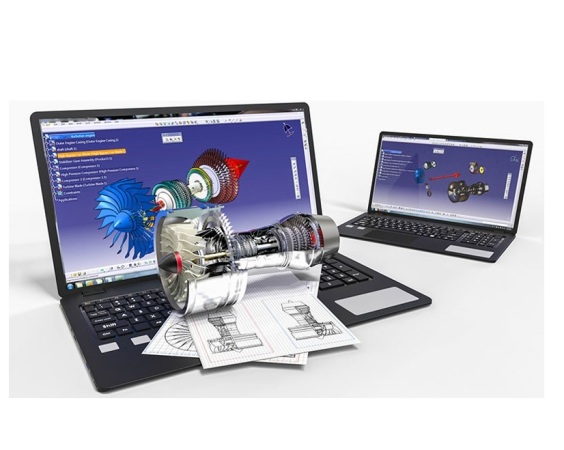
Reviewing and optimizing the design to improve equipment performance and considering supply and manufacturing capabilities. Also, reviewing the method of manufacturing parts considering the limitations is an essential part of reverse engineering at DEMKO Group, and manufacturing engineering based on technical knowledge leads to manufacturable drawings that include dimensional and geometric tolerances of parts.
• Technology Transfer;
DEMKO Group sees reverse engineering beyond the dimensions of vectoring and remanufacturing parts, equipment and machinery, but rather as an important step in acquiring world-class knowledge and technologies and utilizing advanced industrial innovations and technologies in order to leapfrog technology and develop design and engineering knowledge.
In this regard, reverse engineering operations of simple spare parts or advanced equipment and machinery are carried out with comprehensive engineering analysis and with a view based on acquiring knowledge and transferring world-class technologies and in cooperation with other DEMKO Group specialists in the design and research and development departments.
CONTACT US
info@demkogroup.com
Tehran - Sheikh Bahai - Danesh Doost - No. 261 - Unit 4

98-9333478909+
USEFUL LINKS
All rights reserved for this website